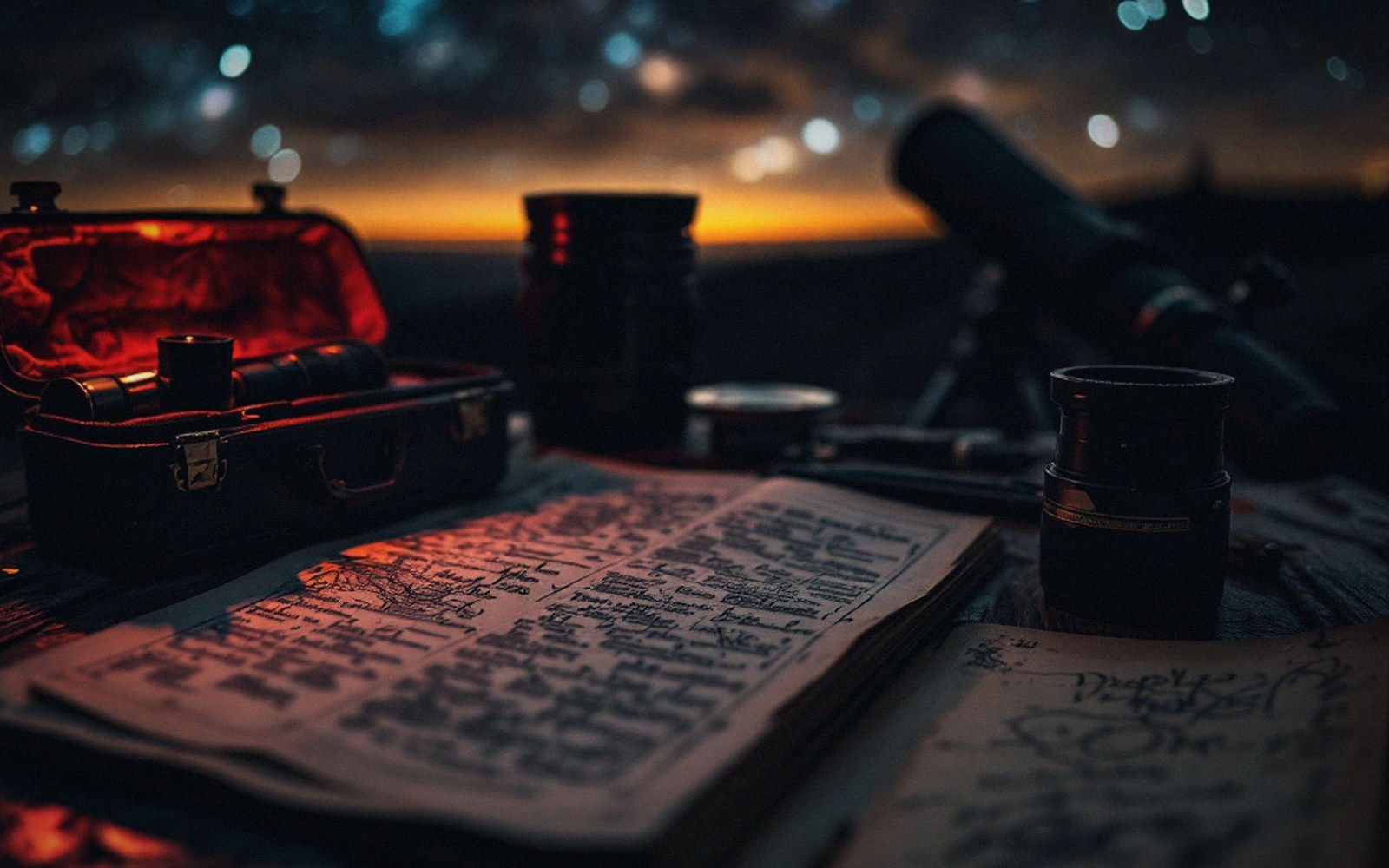
It takes far longer than people allow, and one white light undoes it.
Your eyes need time you probably aren't giving them
Photo: Beyza Kaplan / Pexels
Walk out of a lit room and into the garden, and within a minute or two you can find your way around. That feels like adaptation. It isn't — not the kind that matters for observing. What just happened was your pupils dilating and your visual system making a crude adjustment. Full dark adaptation, the kind that lets you hold faint detail at the eyepiece, takes between twenty and forty minutes, and most casual observers never reach it.
The process runs in two stages. First, cone cells — concentrated at the centre of the retina and responsible for colour and fine detail — reach their adapted state in roughly five to ten minutes. That's the quick part, and it's nearly useless for faint objects. The second stage belongs to the rod cells, which are far more numerous, scattered across the peripheral retina, and vastly more sensitive to dim light. Rods contain a photosensitive pigment called rhodopsin, and rebuilding its concentration after exposure to bright light is a slow chemical process. It cannot be hurried. Forty minutes is a safe allowance for a deep, dark site; some observers allow a full hour before they trust what they're seeing at the edge of threshold.
The enemy is any white light source, and the enemy hits hard. A single glance at an unfiltered phone screen can set rhodopsin recovery back by several minutes — some estimates suggest ten or more. The same goes for a torch, a car's interior light, or a neighbour's security lamp sweeping across the field. Red light destroys dark adaptation far more slowly, which is why red torches have been standard kit at the eyepiece for generations: the rod cells are far less sensitive to long wavelengths, so the chemical damage is minimal. Even so, a bright red light is not consequence-free. Dim is always better than bright, whatever the colour.
First, cone cells — concentrated at the centre of the retina and responsible for colour and fine detail — reach their adapted state in roughly five to ten minutes.
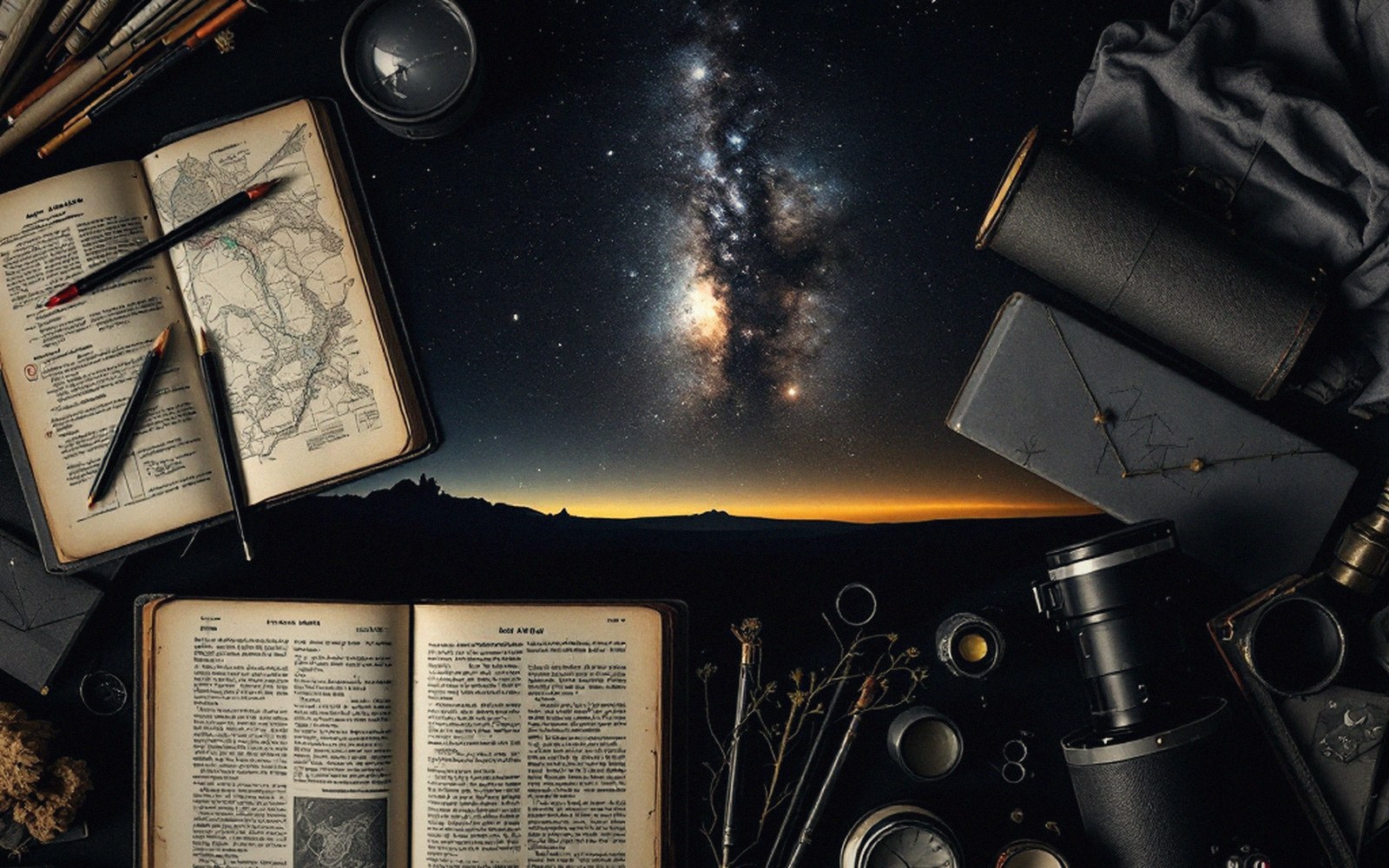
There are no shortcuts worth having. Some observers try patch-and-swap — keeping one eye covered indoors, then switching to it outside — but the brain integrates signals from both eyes, and the gain is modest in practice. The only real method is time in the dark: arrive at the site, let the telescope cool, align the finder, do everything slow. By the time the instrument is ready, your eyes should be too.
What you're protecting is measurable. A fully dark-adapted eye is roughly ten thousand times more sensitive to light than one that has just come in from indoors. That is not a small margin. It is the difference between seeing the outer halo of a globular cluster as a distinct glow and seeing nothing past the core, between resolving the extensions of a faint galaxy and losing them entirely in the noise. The time cost is real; so is the reward.