Resolving the edge
The moment a globular cluster stops being a smudge and becomes a swarm — and what governs whether that happens at all.
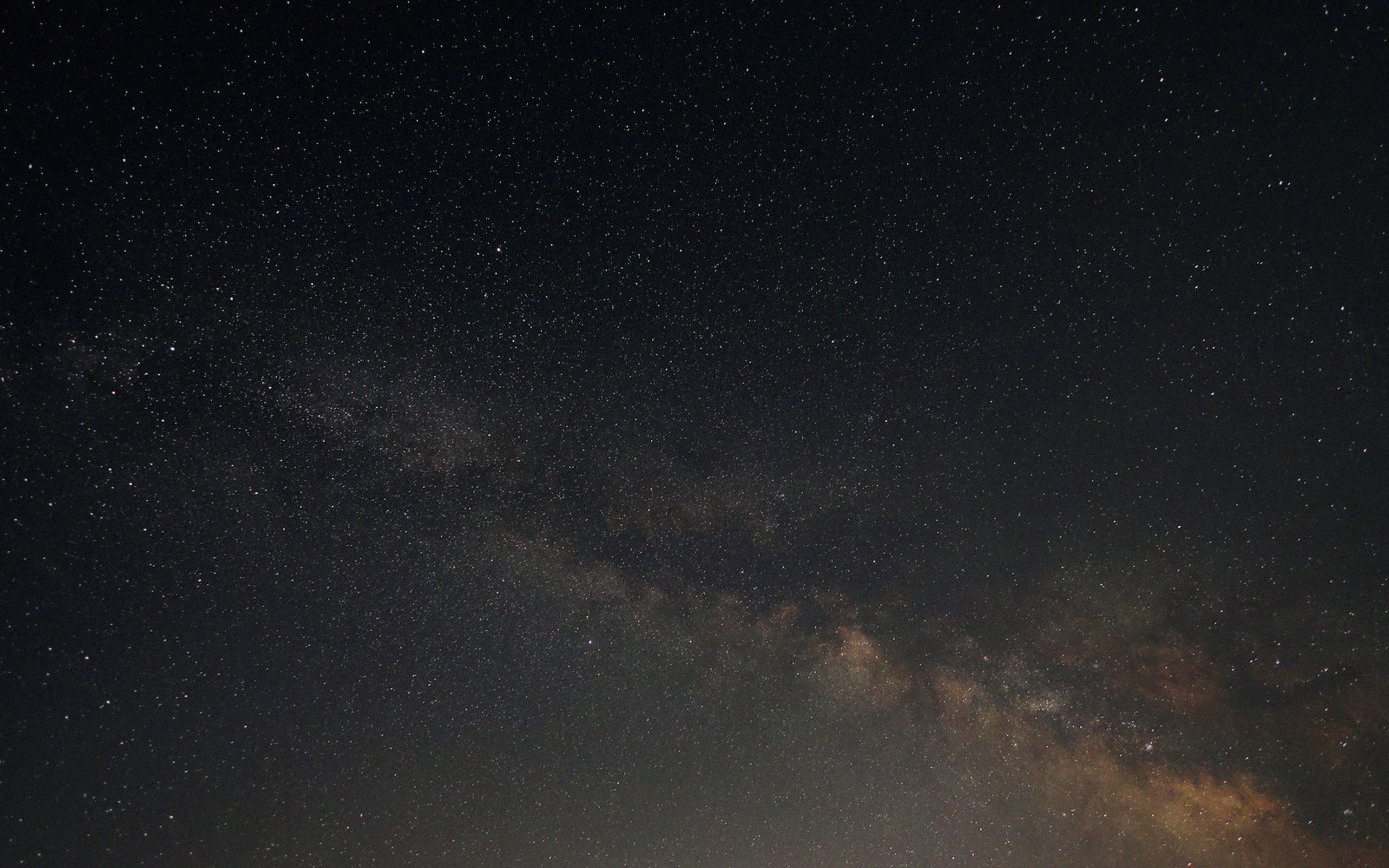
Where a fuzzy ball turns into individual stars, and what decides that.
Photo: Efrem C. / Pexels
What resolution actually means here

Photo: Francesco Paggiaro / Pexels
A globular cluster arrives in the eyepiece as a compressed ball of light, brighter at the centre, fading toward a ragged periphery. The question is whether that periphery ever breaks into points. When it does — when the outer halo suddenly shows individual stars rather than unresolved glow — observers call it resolution, and it is one of the more satisfying moments the hobby offers.
What decides it is a collision between two things: the angular separation of the stars at that cluster's distance, and the resolving power of the aperture in front of you. A telescope's resolution limit is set by its diameter; double the aperture and you roughly halve the smallest separation it can split. Most globulars sit far enough away that even their loosest outer stars are packed too tightly for a small instrument to separate them, so only the halo — never the compressed core — yields individual stars in moderate aperture. A few nearby clusters are exceptions. M13 in Hercules, at around 22,000 light-years, begins to show outlying stars in a 100 mm telescope under a steady sky. Omega Centauri, one of the largest and nearest of all globulars, resolves almost aggressively — outlying stars visible even in binoculars from a dark site.
Distance is the dominant factor. The clusters of the Magellanic Clouds sit so far off that even the world's largest professional mirrors show them as compressed knots rather than star fields. Closer clusters in the Milky Way halo fall along a spectrum: the nearer ones resolve from the outside in as aperture grows; the distant ones remain stubbornly unresolved at the centre regardless of what you point at them.
What decides it is a collision between two things: the angular separation of the stars at that cluster's distance, and the resolving power of the aperture in front of you.

Atmospheric seeing matters nearly as much as aperture on any given night. A cluster that resolves cleanly at the eyepiece on a steady evening can revert to a blur when turbulence bloats every star into a disc several arcseconds wide. Under poor seeing, the stars' discs overlap before the eye can separate them, and the halo collapses back into the same soft glow you started with. This is why experienced observers will revisit a familiar cluster on different nights — not to confirm it is there, but to see how far in the resolution reaches.
The core of any globular is a different problem entirely. Stellar densities near the centre are so extreme that even the Hubble Space Telescope required careful image processing to count individual stars in the innermost regions. Through any ground-based eyepiece, that core remains a smooth, overexposed-looking blaze — and no amount of aperture, on Earth at least, changes that.